
If you've searched "biryani restaurant near me" or spent time reading Indian food guides, you've probably seen the term "dum biryani" thrown around. But what does "dum" actually mean, and why do some restaurants make a point of advertising it? The answer is simple: dum is the difference between biryani that's good and biryani that changes how you think about rice.
What Does "Dum" Mean?
"Dum" comes from the Persian word for "breath" or "steam." In cooking, dum-pukht (or dum cooking) refers to a specific method: you seal a pot with dough, so no steam escapes, and let everything cook slowly on low heat. The pot becomes its own closed ecosystem. The rice doesn't boil — it steams. The meat doesn't fry — it braises in its own juices mixed with spices. Everything happens in that trapped, humid, aromatic air.
How Traditional Dum Biryani is Made
The process starts before the cooking even begins. The meat (or vegetables for veg biryani) is marinated overnight in yogurt and spices — turmeric, chili powder, ginger-garlic paste, cumin, and whatever else the recipe calls for. This isn't just for flavor; it starts breaking down the meat fibers so they absorb spices and stay tender.
The basmati rice is parboiled until it's about 70% cooked — not fully done, but no longer hard. Meanwhile, onions are fried until they're deep golden brown and crispy, and then either layered into the biryani or crumbled over the top.
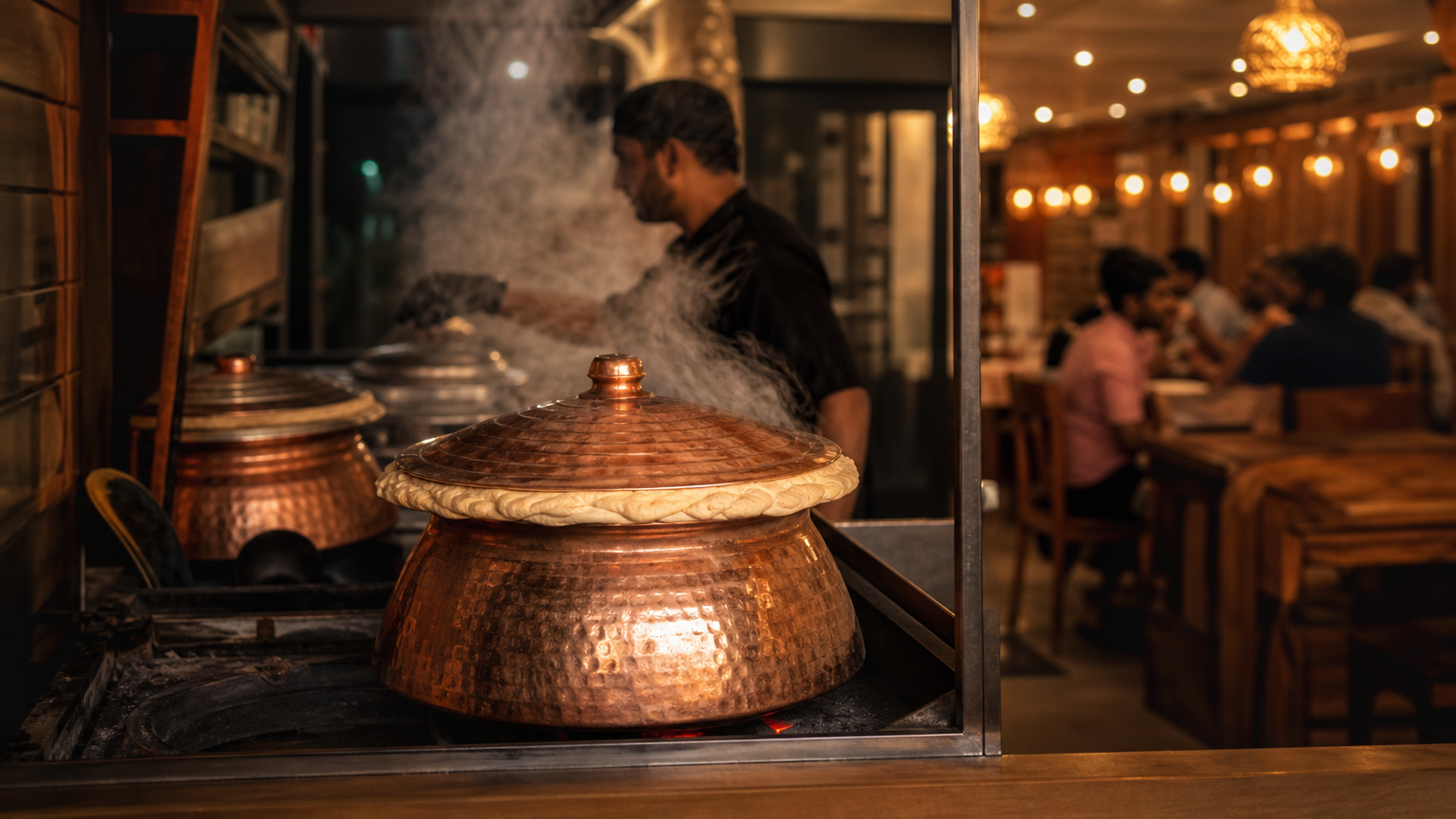
Then comes the assembly. In a heavy-bottomed pot (traditionally a copper handi, but any thick pot works), you layer: a bit of ghee, the marinated meat, some rice, some fried onions, a pinch of saffron soaked in milk, and repeat. It's not mixed — it's layered. Each layer is distinct, which is part of what makes dum biryani taste the way it does.
Finally, the seal. A thin dough (just flour and water) is rolled into a rope and pressed around the rim of the pot, covering any gaps between the lid and the body. This is crucial. Without it, steam escapes and the dum method doesn't work.
The heat is turned to medium-high for 1–2 minutes (just to build a little pressure), then lowered to low or medium-low. Over the next 45 minutes to an hour (sometimes longer, depending on the cut of meat), the sealed pot does its work. The rice finishes cooking in the trapped steam. The meat gets tender. The spices infuse into every grain and every bite.
Why Dum Biryani Tastes Completely Different
The flavor difference is the whole point. When steam can't escape, flavors get concentrated and they circulate. The aroma of cardamom, cinnamon, and bay leaves isn't lost to the air — it's absorbed by every grain of rice. The meat doesn't dry out because it's not being directly heated; it's braising in its own seasoned juices. Even the fried onions stay crispy because there's humidity in the pot, not a dry heat that makes everything brittle.
In contrast, fast biryani — cooked in a pressure cooker or microwave — is rushed. The pressure cooker does speed up the cooking time, but it doesn't build the same depth. Microwave biryani is even more rushed and often turns out mushy or dry. These methods work in a pinch, but they're shortcuts that sacrifice flavor for speed.
The Veg Biryani Version
Vegetarian biryani gets the same slow treatment. Instead of marinated meat, you use paneer (fresh cheese), vegetables like potatoes and peas, or both. The layering and sealing method stays exactly the same. The cooking time might be slightly shorter (since vegetables cook faster than meat), but the principle is identical: seal, seal, and let the steam do the work. Veg biryani isn't "biryani lite" — it's biryani built on plants instead of meat.
Why Biryani2Go Makes Dum Biryani
We named ourselves Biryani2Go because we wanted to prove that takeout and delivery don't have to skip the dum method. Every biryani we make is sealed with dough, steamed low and slow, and then hand-packed to travel. You order a dum biryani, and you get dum biryani — not a shortcut version reheated under a heat lamp.
It takes longer than fast-food service. That's the entire point. Every order is made when you place it, sealed in a handi, and steamed until the rice and spices become one dish instead of separate components thrown together. Whether you're ordering veg or non-veg biryani, with delivery or pickup, you're getting the traditional dum method.
Frequently Asked Questions
What is dum biryani?
Dum biryani is a traditional Indian rice dish where basmati rice is layered with marinated meat or vegetables, sealed in a pot with dough, and slow-cooked on low heat. The sealed environment traps steam, allowing all the flavors to infuse into the rice evenly.
Why is dum biryani better than regular biryani?
Dum cooking seals all the steam inside, so the rice absorbs the meat juices and spices evenly, resulting in deeper flavor and a different texture than fast-cooked or microwaved biryani.
How long does dum biryani take to cook?
Traditional dum biryani takes 45 minutes to over an hour. At Biryani2Go, we make each order to order, so expect 30–45 minutes for pickup or 45–60 minutes for delivery across Omaha and Council Bluffs.
What's the seal made of?
The seal is made of dough (atta) — a simple flour-and-water mixture that hardens as the biryani cooks, creating an airtight seal around the handi (cooking pot).
Can I order dum biryani for delivery or takeout?
Yes. Biryani2Go offers dum-cooked biryani for pickup and delivery across Omaha and Council Bluffs. Check our menu to order now.
Want to learn more about Indian food or biryani varieties? Check out our blog for more guides, or visit our menu to place an order today.